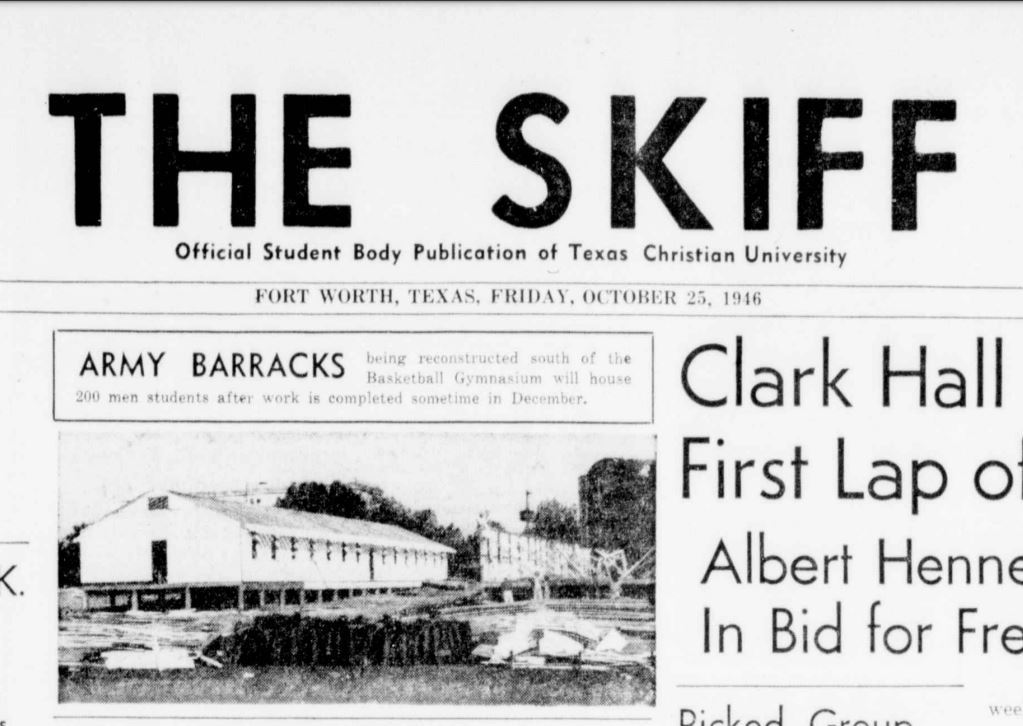
After WWII, millions of American veterans returned home and pursued higher education. This was only possible because of the monumental legislation known as the GI Bill. So many Veterans enrolled at TCU, the university was forced to add barracks to the campus for Veteran housing.
Sources
Edward Humes, Over Here: How the GI Bill Transformed the American Dream (Orlando, FL: Harcourt, 2006).
Moore, Richard. “Rent, Heat, Nearness of Barracks Please Vets.” The Skiff, January 10, 1947.
Moore, Richard. “Army Barracks.” The Skiff, October 25, 1946.
Al Russell Trio, “World War II Blues,” March 1947, Accessed December 4, 2023.
The Thomas Family, “I Ain’t Gonna Study War No More,” December 1946, Accessed December 4, 2023.
Victor Military Band, “The Caissons Go Rolling Along,” February 1942, Accessed December 4, 2023.
Victor Military Band, “The Marines’ Hymn,” February 1942. Accessed December 4, 2023.
For Further Reference
Altschuler, Glenn C. and Stuart M. Blumin. The GI Bill: The New Deal for Veterans (New York: Oxford University Press, 2009).
Mettler, Suzanne. Soldiers to Citizens: The G.I. Bill and the Making of the Greatest Generation (New York: Oxford University Press, 2005).
U.S. Department of Veterans Affairs Post 9/11 GI Bill.
Meet our Guest
Edward Humes is a California-based journalist and author. Mr. Humes is a Philadelphia native and has authored a large body of narrative nonfiction work. In 1989, Mr. Humes was awarded the Pulitzer Prize for his reporting on the military establishment in Southern California for the Orange County Register. In 2006, Mr. Humes authored Over Here: How the GI Bill Transformed the American Dream, which is the subject of our interview.
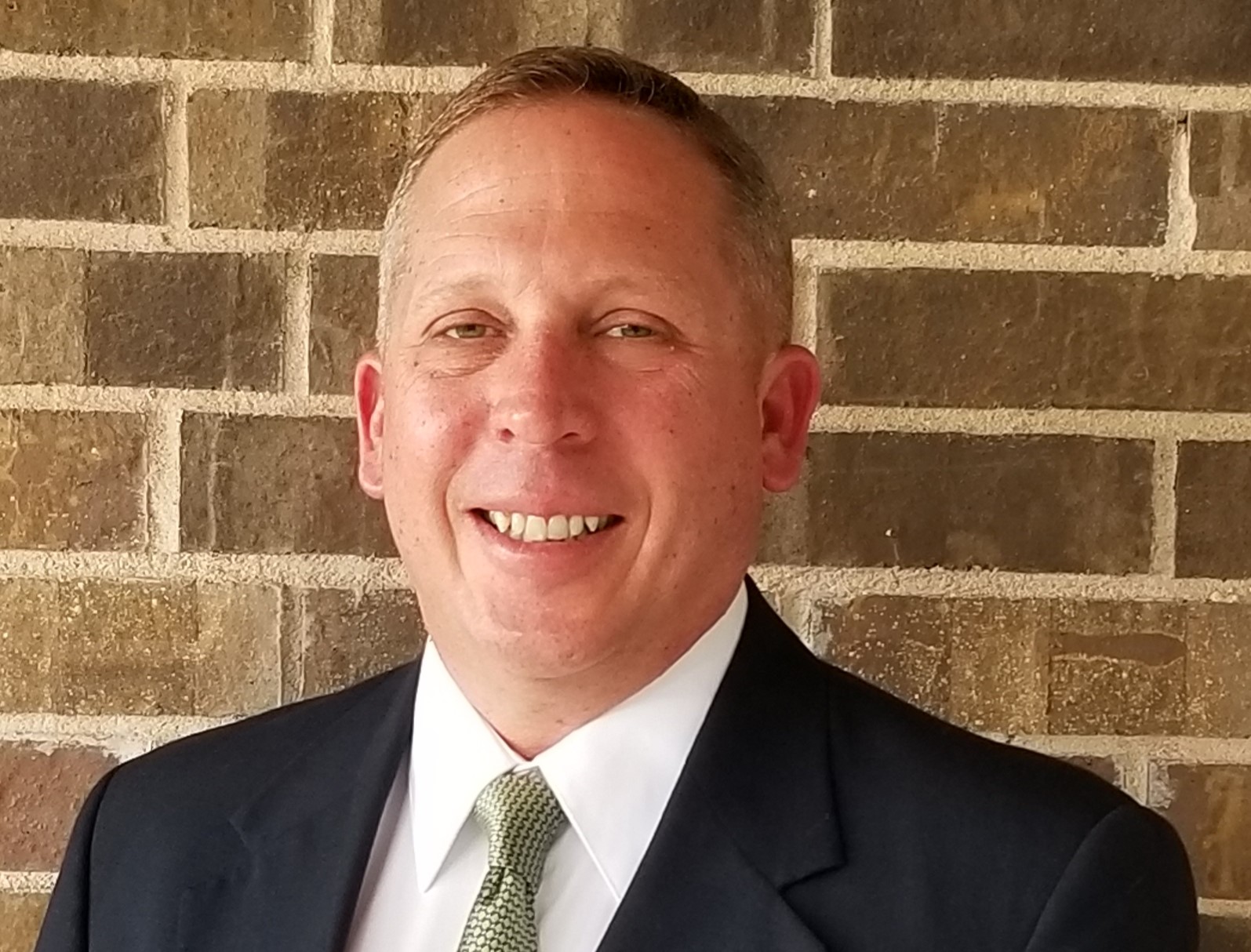
Keith Glover
Keith Glover is a Senior Political Science student from Aledo, Texas. He retired from the United States Marine Corps in 2021 and is a member of the TCU Student Veteran Alliance.
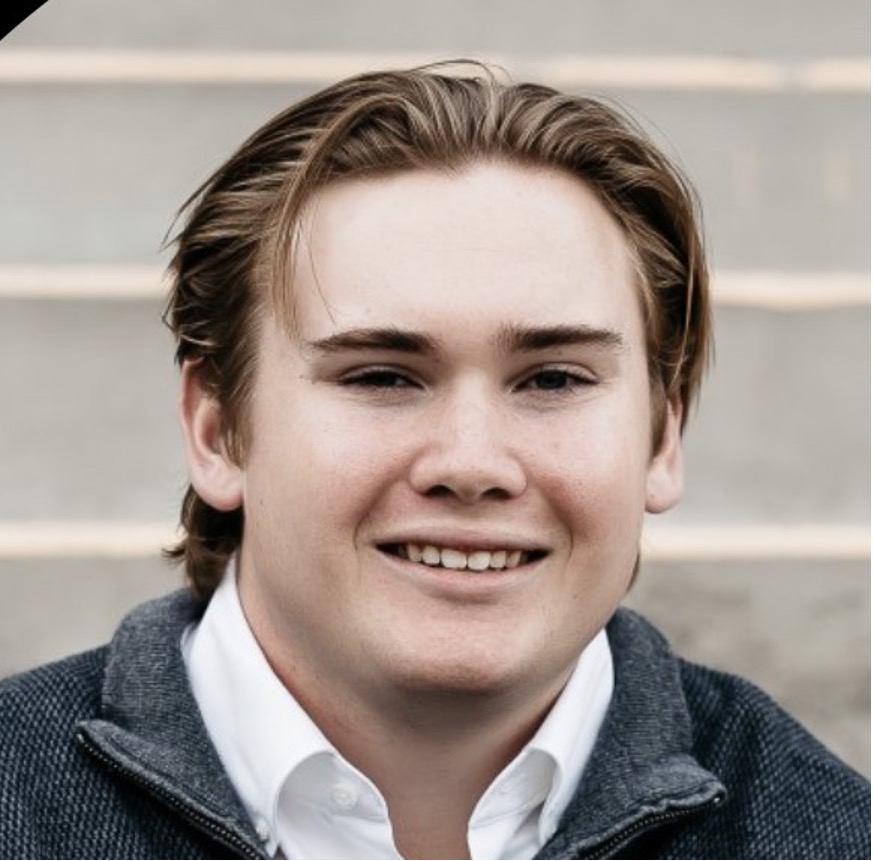
Griffin Miller
Griffin Miller is a Senior Marketing and History student from San Diego, CA. Griffin plans on attending law school after college.