S5 Teaser: What was the Scientific Revolution?


Posted on

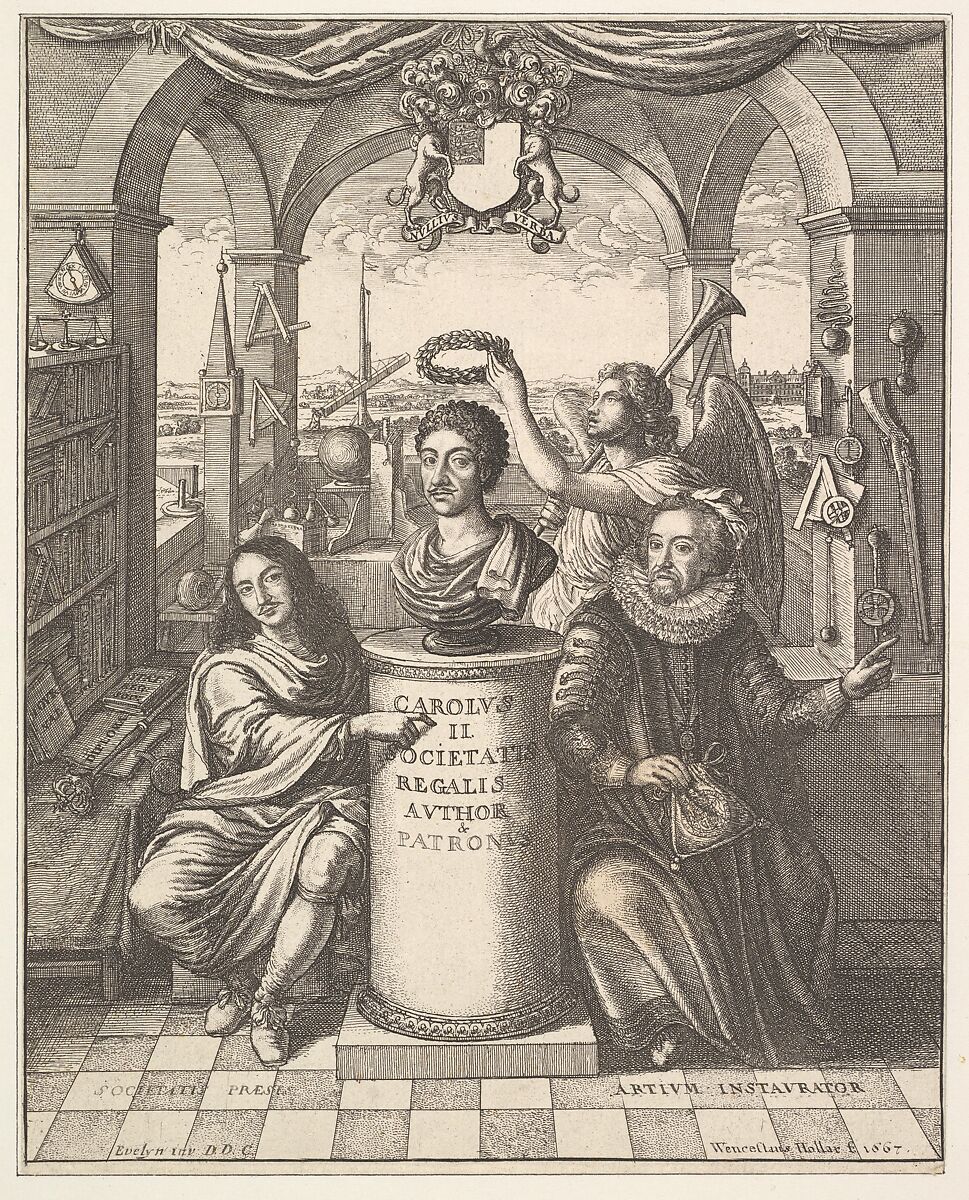
The title page engraving from Thomas Sprat’s History of the Royal Society of London, one of the premier institutions for scientific research in early modern Europe

Between around 1450 and 1750, historians agree that something exciting happened in Europe: new discoveries led to new knowledge about the natural world. Scholars used new methods, like experimentation, to study and examine phenomena in nature. Longstanding theories about the order of the universe and the workings of nature were overturned. In popular histories of this period, the Scientific Revolution is often understood as a period when people let go of their old superstitions and blind beliefs—to include religious faith—and embraced reason, logic, and the evidence of their senses. But is this really true? Were science and religion in conflict in early modern Europe?

Melissa Reynolds

Dr. Reynolds is Assistant Professor of Early Modern European History at TCU.

Recent Episodes

  • S5 E3: Copernicus Demotes Humanity

    In this episode, student historians Viktor Lord Harrington, Lauren Flores, and Samuel Saenz tackle a myth propagated by the twentieth-century psychologist Sigmund Freud. Freud argued in an early twentieth-century lecture that the early modern revolution in astronomy which placed the sun, rather than the earth, at the center of the universe, had a profound effect…

  • S5 E1: Columbus Believed the Earth was Flat

    In this episode, Whitney Kay, Merit Wagstaff, and Abby Pruns tackle the myth that when Christopher Columbus sailed the ocean blue in 1492, he and his crew—and everyone else in Europe at the time—believed the earth was flat. Sources Cited in this Episode Cohen, Richard. Making History: The Storytellers Who Shaped the Past. Simon &…

  • S5 E2: The Church Banned Dissection

    In this episode, Cooper Moog, Remington Strickland, and Wyatt Franz tackle the myth that the medieval church prohibited human dissection, supposedly setting back the progress of modern medicine by centuries. Sources Cited in this Episode Croce, Paul Jerome. “Probabilistic Darwinism: Louis Agassiz vs. Asa Gray on Science, Religion, and Certainty.” Journal of Religious History 22,…

Archive