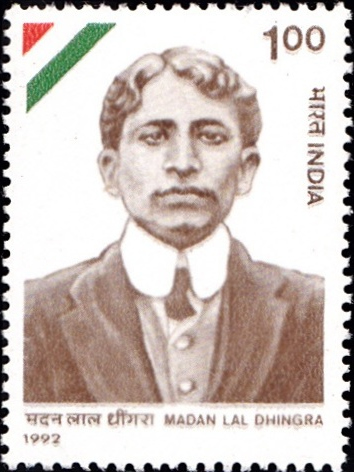
Madan Lal Dhingra was a figure initially vilified for his violent actions but later remembered as a revolutionary driven by an intense desire for the freedom of his land and people, a cause for which he was willing to take drastic measures. In contrast, Sir Edward Henry emerged as a prominent authority in both the United Kingdom and India through his contributions to criminal justice, particularly his pioneering work on fingerprint classification. Henry’s research transformed fingerprints into a reliable method for identifying repeat and unknown offenders, ultimately securing their acceptance as admissible evidence in courts. Together, these figures reflect two sharply different responses to imperial rule: one rooted in revolutionary resistance and the other in institutional reform and technological advancement.
Sources
Chicago Daily Tribune. “Patriotism Is Murder Plea: East Indian Slayer Defends Wyllie Killing in Court; Is Eager to Be a ‘Martyr.’” July 11, 1909.
Henry, Edward Richard. Classification and Uses of Finger Prints. London: H.M. Stationery Office, 1928.
Old Bailey Proceedings Online. “Trial of Alfred Stratton (22) and Albert Ernest Stratton (20).” May 2, 1905. https://www.oldbaileyonline.org/record/t19050502-415.
Parliament of the United Kingdom. “Execution of Madar Lal Dhingra.” Commons Sitting of Tuesday, 31st August 1909, vol. 5, no. 10 (August 31, 1909): 169–342.
Supreme Court of Canada. R. v. MacDonald. n.d. https://decisions.scc-csc.ca/scc-csc/scc-csc/en/item/13410/index.do.
The Tatler and Bystander. “People in the Week’s News.” Vol. 33, no. 419 (July 7, 1909): 8.

Elijah Randall