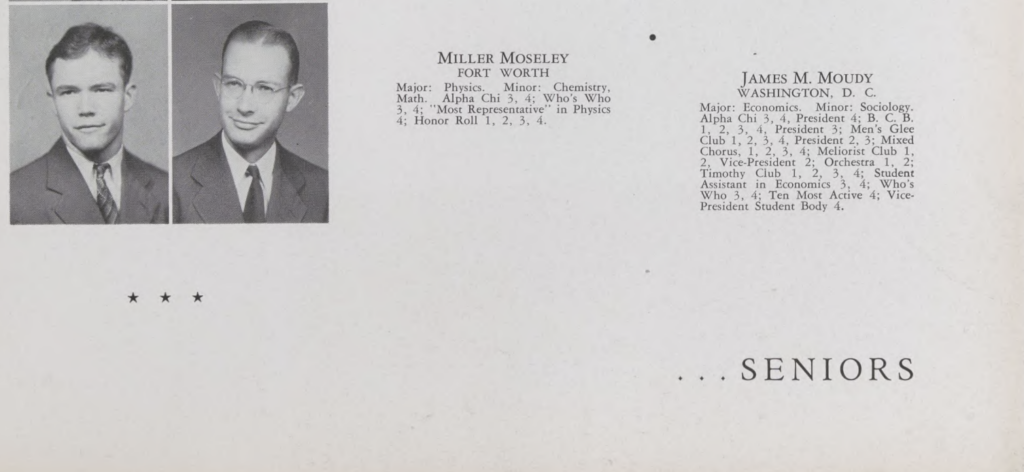
Follow the story of the Manhattan Project through the eyes of Harrison Miller Moseley (TCU ’43) as hosts Brian and Walter discuss the broader moral, social, and political consequences of the development of a nuclear weapon.
Sources
Brewer, Susan A. Why America Fights : Patriotism and War Propaganda from the Philippines to Iraq. New York: Oxford University Press, 2009.
Miscamble, Wilson D. The Most Controversial Decision : Truman, the Atomic Bombs, and the Defeat of Japan. New York: Cambridge University Press, 2011.
“August 6, 1945: Statement by the President Announcing the Use of the A-Bomb at Hiroshima.” Miller Center, August 23, 2023.
“When They Drop the Atomic Bomb.” Voices and Visions. Accessed October 10, 2023.
Sheldon Allman, “Crawl out through the Fallout,” 1960, Internet Archive. Accessed October 10, 2023.
For Further Reference
Roberts, James A. “Classified Research and the Open University.” Merrill Series on The Research Mission of Public Universities. Accessed October 10, 2023.
McGill, Ralph. “One Word More: Now It’s Atoms?” The Atlanta Constitution, January 7, 1944.
“Atomic Energy Commission.” PBS. Accessed October 10, 2023.
Meet our Expert
Dr. Robert Citino is the Samuel Zemurray Stone Senior Historian at the National World War II Museum and a leading expert in World War II military history. Dr. Citino received his doctoral degree in History from Indiana University in 1984 and has held academic positions at the University of North Texas, the United States Military Academy, and the United States Army War College. Dr. Citino’s books have received numerous awards such as the Paul M. Birdsall Prize for Best Book in Strategic Studies in 2004 and the Distinguished Book Award for the Society for Military History in 2005.
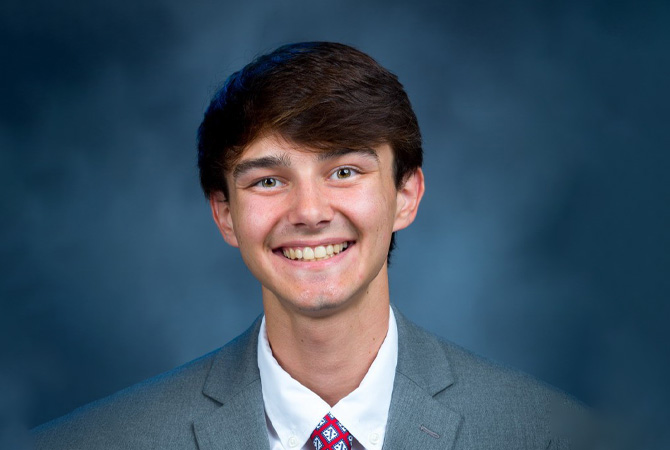
Walter Flanagin
Walter Flanagin is a senior history major at TCU from Conway, Arkansas who hopes to one day attend law school and become an attorney.
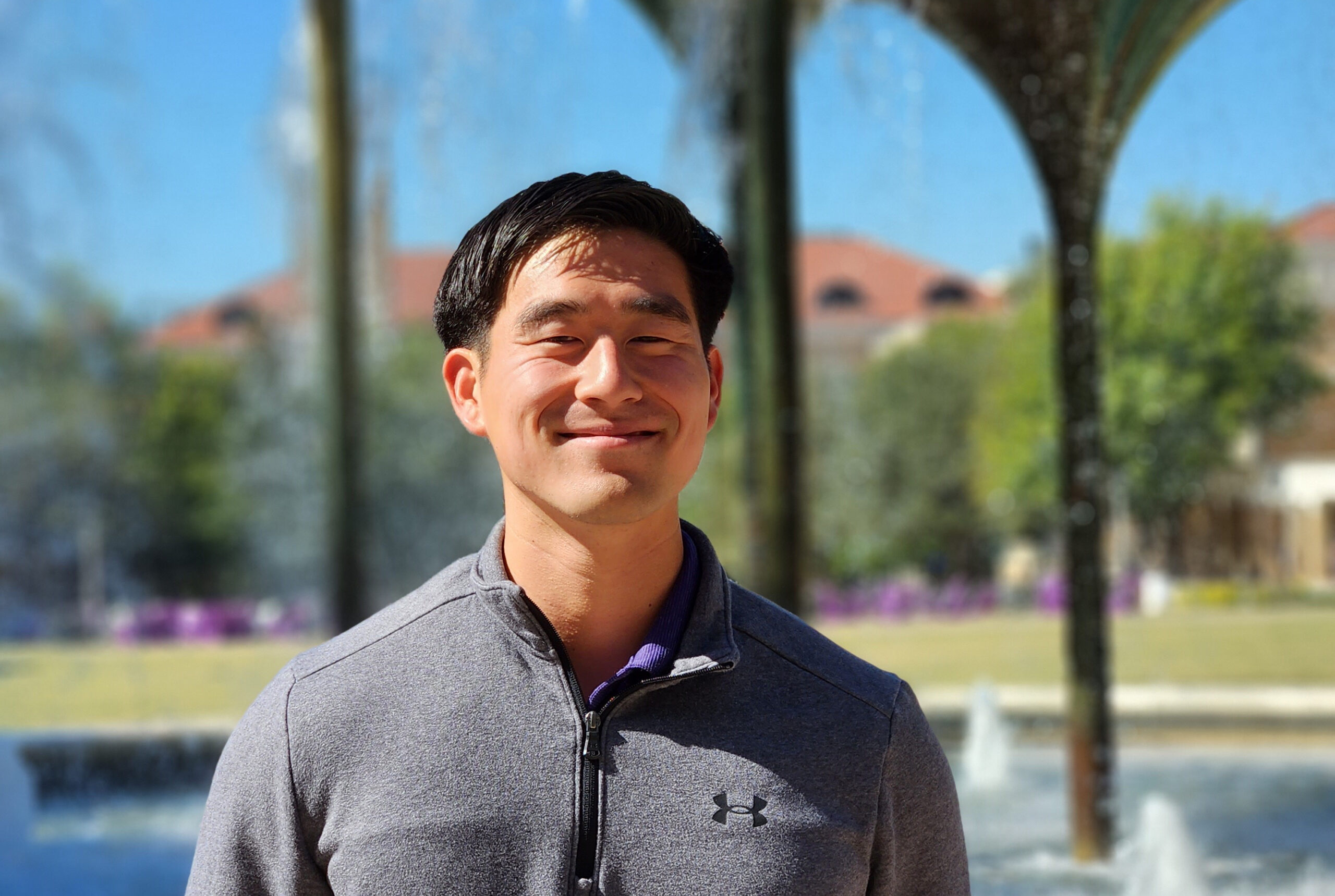
Brian Kim
Brian Kim is a senior history and political science major from Pasadena, California who intends to pursue graduate studies and a career in academia.